
Crafting a Board Meeting Agenda That Actually Drives Action

It's easy to fall into the trap of treating a board meeting agenda like a simple to-do list. But a truly effective agenda is so much more than that. Think of it as a strategic document—the single most powerful tool you have for setting the tone, focus, and ultimate success of your meeting.
Your Board Meeting Agenda Is a Strategic Weapon, Not a Checklist
Let’s be honest. Most agendas are just a repository for old business, routine reports, and perfunctory approvals. This approach doesn't just waste time; it's a massive missed opportunity to guide your organization's future.
A thoughtfully designed agenda shifts the conversation from mundane updates to high-impact strategic discussions. It guarantees that every director's valuable time is spent on what actually moves the needle forward. This simple change in perspective is the bedrock of effective governance.
From Unfocused Debates to Decisive Outcomes
Without a sharp, strategic focus, meetings quickly go off the rails. Directors get bogged down in minor operational issues, while the big, meaty strategic questions get shoved to the end of the meeting. This leads to rushed decisions or, even worse, simple "rubber-stamping" without real consideration.
The results are predictable: disengaged directors, missed opportunities, and that sinking feeling that everyone’s time was just wasted. In one real-world case, a simple agenda error at a school district forced them to call a special meeting, delaying a critical decision and frustrating the entire community.
A great agenda is the difference between a meeting that drains your board and one that energizes it. It's the framework that ensures you’re not just talking, but building, deciding, and advancing the mission.
On the flip side, a strategic agenda builds momentum. It carves out significant time for generative discussions—exploring future trends, sizing up competitive threats, and brainstorming new opportunities. This proactive approach leads to much higher director engagement and genuinely forward-thinking outcomes. For more great examples, you can find additional industry insights on our blog.
To make this crucial shift, start thinking about what a strategic agenda actually does:
- Prioritizes the Future: It deliberately puts forward-looking topics at the top of the list. This sends a clear signal that the board's primary role is strategic guidance, not just oversight.
- Forces Preparation: By framing topics as questions to be answered or problems to be solved, it pushes directors to arrive ready for a real debate.
- Manages Energy: A smart agenda tackles the most demanding topics when participants are fresh and focused, not when they're fading at the end of a long day.
Ultimately, reframing the agenda from a chore to a strategic weapon is the first and most important step toward more productive and impactful governance.
Building the Core of Your Action-Oriented Agenda
Moving beyond a generic template is the first real step toward a board meeting that actually accomplishes something. The goal isn't just to list topics; it's to structure them in a way that pushes the conversation toward clear, strategic outcomes. This means being deliberate about every single section, from routine approvals to major strategic debates.
One of the most powerful tools I've seen for streamlining a meeting is the consent agenda. It’s brilliant in its simplicity. You bundle all the routine, non-controversial items—like the previous meeting’s minutes, standard committee reports, or minor administrative approvals—and approve them all in a single motion. No discussion needed.
This simple shift can clear the decks in under a minute. Instead of spending 15 valuable minutes rubber-stamping predictable items one by one, the board can jump straight into the issues that require their expertise. It immediately sets a tone of efficiency and shows you respect the directors' time.
Framing Topics for Strategic Debate
How you word an agenda item can be the difference between a shallow update and a deep, meaningful discussion. Ditch the generic labels like "Market Expansion Update." Instead, frame it as a question or a decision that demands critical thinking from your board members.
Let's walk through a real-world scenario: a company is thinking about entering a new international market.
- A weak agenda item would be: "Discuss Q4 international strategy."
- A much stronger, action-oriented version is: "Debate and Decide: Should we pursue a direct entry or a partnership model for the European market expansion in FY2025? Review attached risk analysis and financial models."
This framing nails several things at once. It clarifies the exact decision the board needs to make, points them to the specific pre-reading materials, and sets up a focused debate between two clear options. You're guaranteed to have a more productive conversation.
The way you structure these core components directly impacts the meeting's flow and effectiveness. This infographic breaks down a simple process for building a more strategic board meeting agenda.
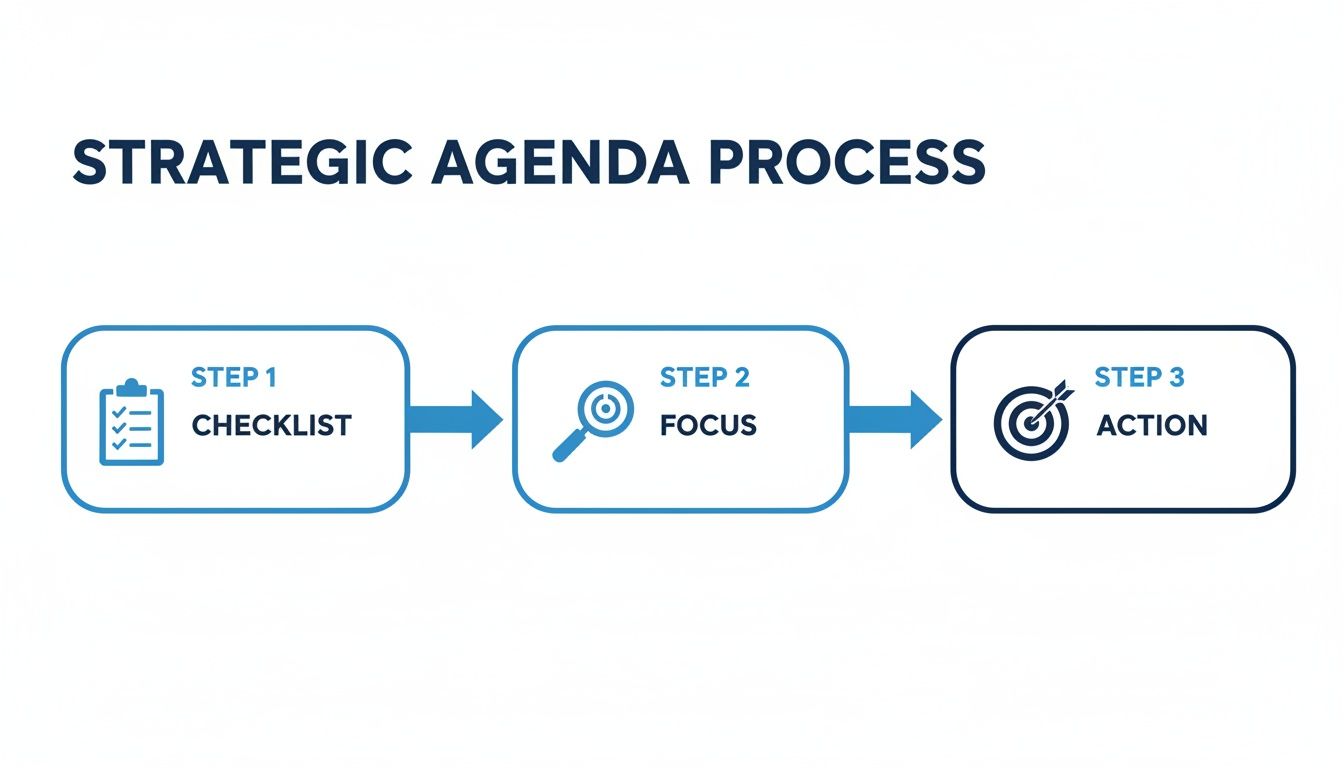
This process shows how moving from a simple checklist to a focused, action-oriented structure is the key to unlocking truly productive board discussions.
Allocating Time and Managing Reports
Time is the most precious resource in any board meeting. Assigning realistic time slots to each item isn't just an administrative task—it's a strategic act. If a topic is complex, give it the time it deserves. Rushing a critical decision at the end of a long meeting is a classic recipe for poor governance.
This has never been more critical. Directors now spend an average of 245 hours a year on their duties, with only about 74 hours spent in actual meetings. With agendas covering everything from cybersecurity to climate risk, making every minute count is non-negotiable.
Committee reports also need a strategic overhaul. Don't let chairs read their reports verbatim. Instead, the agenda should prompt them to present only their top three key takeaways or critical decision points. The full report belongs in the pre-read packet; meeting time is for discussion and action.
This focus on actionable insights should carry through to your post-meeting tasks as well. Capturing decisions and action items accurately is crucial. To make this foolproof, many teams are now using tools for project meeting transcription to ensure no detail gets lost. The AI-powered tools from SpeechYou are particularly helpful here, as they work seamlessly and are available everywhere thanks to dedicated mobile apps for all your devices.
Designing the Agenda for Maximum Engagement and Flow
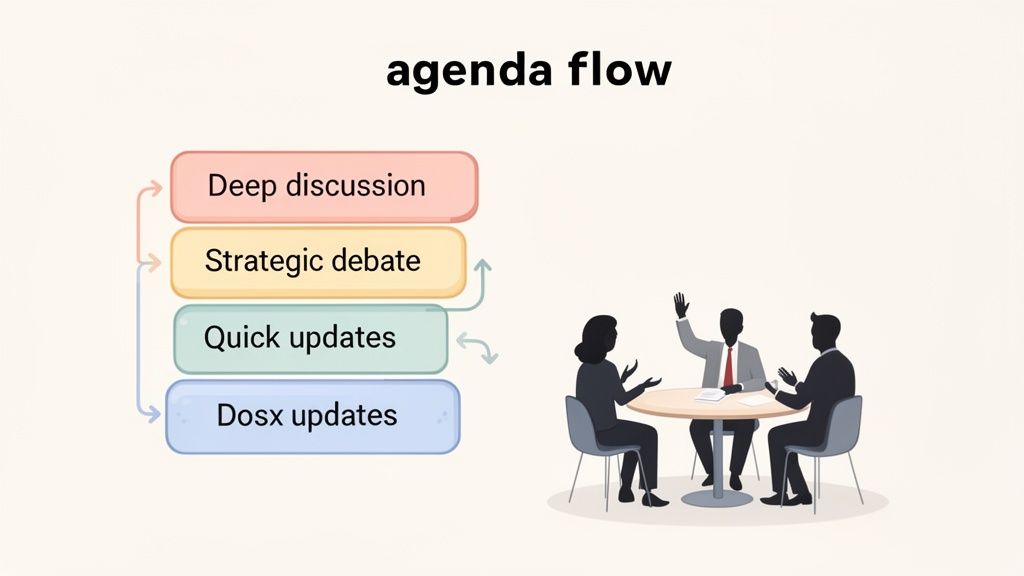
The order of items on your board meeting agenda is more powerful than most people think. A poorly sequenced agenda can absolutely torpedo the energy in the room before you even get to the good stuff. The secret is to think strategically about the flow, building momentum to keep everyone sharp and engaged from start to finish.
Think about the human element. Directors walk into a meeting with their full tank of mental energy. That first hour is prime time. It’s when you should be tackling your most critical, brain-burning discussions—the ones that demand real strategic thinking and healthy debate.
Trying to jam a complex decision, like a major capital investment or a market pivot, into the last 20 minutes is a classic mistake. By that point, decision fatigue is real, and you're far more likely to get a rushed, half-baked answer. Always start strong with what matters most.
Sequencing for Strategic Momentum
Once you've tackled the heavy hitters, you can transition to items that require less intense debate. A logical flow isn't just about checking boxes; it’s about maintaining a productive rhythm.
Here’s a structure I’ve seen work wonders:
- Deep Discussion First: Kick things off with the most significant strategic decision or debate on the docket. This leverages that peak director focus and immediately signals that this meeting is about high-impact work.
- Strategic Updates Next: Follow up with key updates from committees or the executive team. The key here is to frame them around insights and specific points where the board's input is needed, not just a dry recitation of what they’ve been doing.
- Routine Items Last: Wind down with the less demanding stuff, like routine operational reports or planning for the next meeting. This lets the meeting conclude on a productive note without burning people out.
This approach respects the natural ebb and flow of human energy and makes sure the board's best thinking is aimed squarely at the biggest challenges.
A great agenda feels like a guided conversation, not just a random to-do list. Each item should build on the last, painting a clear picture of where the organization stands and where it's headed.
The Power of Preparation
Of course, the most brilliantly designed agenda is useless if directors show up cold. The one non-negotiable rule is getting the final agenda and all the pre-reading materials out the door well in advance. I always aim for a full week before the meeting.
This isn't just about being organized; it sets a clear expectation that everyone comes prepared. When directors have time to actually read and digest the reports, financials, and briefs, they walk in ready to contribute from minute one.
Modern tools have made this part of the process a breeze, letting directors review materials from anywhere. For hybrid boards juggling in-person and remote members, it's crucial to nail the collaboration dynamics. Our guide on remote work best practices has some great tips for making those hybrid meetings click.
Better yet, the right tech can help everyone stay focused during the meeting itself. When you’re using an accurate transcription tool like SpeechYou, nobody has to worry about scribbling down every single word. People can actually listen and engage in the conversation, knowing a perfect record is being captured. With mobile apps making it accessible everywhere, SpeechYou ensures no key detail gets missed, freeing up your board to do what they do best: drive strategy.
Integrating Technology for Smarter Board Meetings
In today's world of distributed teams and hybrid work, old-school board meeting practices just don't cut it anymore. Technology is the glue that holds everything together—connecting directors, keeping records straight, and making sure momentum doesn’t die between sessions. The right tools can completely transform your meeting process from a logistical headache into a smooth, productive rhythm.
This isn't just about better video calls. It's about building a single source of truth for every decision, debate, and action item. For high-stakes governance, specialized tools aren't a luxury; they're essential.
Capturing Every Detail with AI Transcription
What if you could have a perfect, searchable transcript of every single word said in a meeting? That's what AI transcription brings to the table. Instead of putting all the pressure on a secretary to capture complex discussions live, you can let technology do the heavy lifting with incredible accuracy.
This is exactly why we built SpeechYou. It's a game-changer for boards, creating transcripts directly from calls on Zoom, Teams, or Google Meet. The process is dead simple: it generates a precise, timestamped record that becomes an indispensable tool for writing minutes, clarifying decisions, and holding everyone accountable.
For remote and hybrid boards, that level of precision is non-negotiable. It makes sure every director, whether they’re in the room or on a screen, is working from the same information. And because SpeechYou is available everywhere with dedicated mobile apps for iPhone, iPad, and Mac, directors can pull up critical information whenever they need it.
From Raw Transcript to Actionable Insights
A transcript is great, but its real power is unlocked when you can pull out the important stuff in seconds. This is where AI makes all the difference. Forget about manually scanning through pages of text to find what you're looking for.
With a tool like Ask AI in SpeechYou, you can just ask questions directly. For example, you can tell it to:
- Generate a summary of that two-hour finance discussion.
- List out all key decisions made during the meeting.
- Pull every single action item and who it was assigned to.
This turns a static document into a dynamic, interactive knowledge base. If you've ever struggled to remember the exact wording of a motion passed last quarter, you know how big of a deal this is. It helps the board follow through on its goals without letting anything fall through the cracks. You can learn more about how to get a full transcript from your next Zoom meeting in our detailed guide.
Technology should empower directors to focus on governance, not on administrative burdens. An accurate, AI-analyzed transcript frees up mental energy for strategic thinking and robust debate.
The rise of hybrid formats for cornerstone events like annual general meetings (AGMs) really drives this point home. A 2023 study found that while 70% of over 1,100 AGMs went back to being in-person, the need to document those sessions for remote stakeholders, legal teams, and auditors is more critical than ever. Tools like SpeechYou, available everywhere with its suite of mobile apps, are perfect for bridging that gap by recording meetings and preserving precise timing—crucial for analysis and creating accurate records. You can check out more insights on the evolution of annual meetings on Computershare.com.
Turning Discussion Into Action After the Meeting Ends
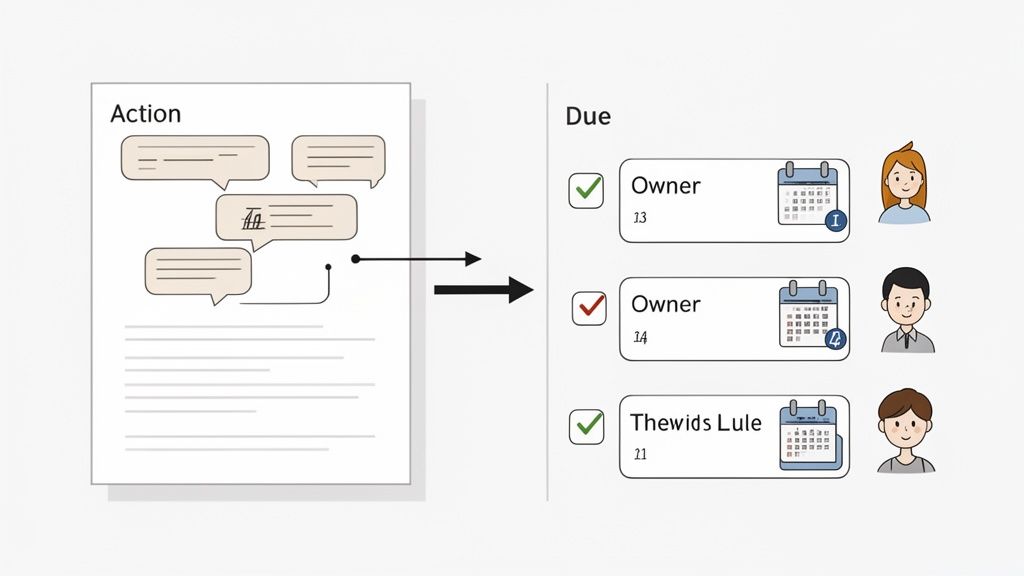
Let's be honest: a great meeting isn't measured by the quality of the conversation. It’s measured by what happens next. Once everyone hangs up, the real work begins—turning those discussions into concrete, trackable actions. A perfectly crafted board meeting agenda is completely wasted without solid follow-through.
This post-meeting workflow is where momentum is either built or lost. Brilliant ideas and firm decisions have a tendency to evaporate into thin air without a clear system for capturing and assigning them.
From Transcript to Action Items
First things first: you need a reliable record of what happened. Trying to draft minutes from memory or scribbled notes is a recipe for disaster. You’re far better off starting with a precise, AI-generated transcript. It provides an unshakeable foundation of what was actually said, debated, and decided.
This is where a tool like SpeechYou becomes indispensable. Because it's available everywhere and has dedicated mobile apps, your team can access its features anytime. It can generate a complete transcript and then use AI to instantly pull out key decisions and action items. This isn't just about saving time; it’s about getting it right. This process can shave hours off drafting minutes while dramatically improving accuracy.
A timestamped transcript is your single source of truth. It puts an end to any "who said what" debates and ensures every action item is tied to a specific, verifiable moment in the meeting.
This level of detail is more critical than ever. According to research from The Conference Board on board leadership, board meeting frequency for S&P 500 companies is down, yet director workloads are up. Every minute counts. AI tools that generate instant summaries and action items are essential for keeping up.
Assigning Ownership and Deadlines
Once you have a clean list of action items, the next step is assigning clear ownership. Every single task needs a name and a realistic deadline next to it. Ambiguity is the enemy of progress.
- Action Item: "Research new CRM software options."
- Owner: John Smith (VP of Sales).
- Deadline: End of Q3.
This simple structure creates an accountability loop right away. John knows exactly what's expected, and the board has a clear timeline for follow-up. This is seamless with a tool like SpeechYou, which not only identifies these tasks but also makes them accessible everywhere through dedicated mobile apps. Owners can review their commitments on any device, anytime.
If you want to dig deeper into this, we've put together a guide on the best tools to generate meeting notes.
Closing the Loop with Feedback
Finally, the best boards are always getting better. The post-meeting phase is the perfect time to gather quick feedback on the meeting itself. A simple, anonymous three-question survey can give you incredibly powerful insights.
- On a scale of 1-10, how effective was this meeting?
- What was the single most valuable part of our discussion?
- What’s one thing we could do to make our next meeting even better?
This simple habit builds a culture of continuous improvement, ensuring your next board meeting agenda is even more strategic and effective than the last.
Answering Your Board Meeting Agenda FAQs
Even the best-laid plans can hit a few snags. When you're putting together a board meeting agenda, certain questions pop up time and time again. Here are some quick, practical answers to the most common ones I've heard over the years.
How Far in Advance Should the Agenda Be Sent?
The absolute gold standard here is one full week before the meeting. Anything less and you're not giving your directors the respect or the time they need to come prepared.
Sending the agenda and all the materials a week out allows them to actually read, digest, and think critically about the issues. This leads to much richer, more productive discussions instead of people just seeing the information for the first time.
What Is the Ideal Length for a Board Meeting?
Most productive board meetings I've been a part of run somewhere between 90 minutes and three hours. That seems to be the sweet spot.
If you're wrapping up in under an hour, you're probably not digging deep enough into strategic topics. On the flip side, if you're consistently pushing past three hours, you're hitting the point of decision fatigue, and the quality of those decisions will suffer. A meeting that always runs long is a big red flag that your agenda is overloaded or your time estimates are way off.
How Do We Handle Urgent Last-Minute Items?
It happens. A critical issue comes up after the agenda has been distributed. The best way to handle this is to have a standing "New Business" section on your agenda.
But—and this is a big but—the board chair needs to be a firm gatekeeper. They must vet any last-minute addition to confirm it's a true, can't-wait-until-next-month emergency. If it's just the result of someone's poor planning, it needs to be pushed to the next meeting.
An effective board meeting agenda isn't just a list; it’s a time management tool. Protecting its integrity by managing last-minute additions is crucial for keeping the meeting focused and on track.
When these unexpected discussions do happen, having a perfect record is key. That's where a tool like SpeechYou comes in handy. It can transcribe the meeting, ensuring that even discussions on surprise topics are captured accurately. With mobile apps and universal access, every director can review the official record of what was decided, no matter when the item was added.
Ready to make your board meetings more efficient and accountable? SpeechYou provides precise AI-powered transcription and summaries to ensure no detail is ever missed. Get started today by visiting https://www.speechyou.com.
Tags
Share this article
Related Articles

8 Essential Ground Rules for a Meeting to Boost Productivity in 2026
Transform your team's efficiency with these 8 essential ground rules for a meeting. Learn how to set...

How to Take Meeting Notes That Actually Drive Action
Stop wasting time in meetings. Learn how to take meeting notes that boost clarity, drive results, an...

7 Best Voice Recorders With Transcription: Apps & Devices
Compare 7 voice recorders with transcription: Speechyou Web and iOS, AI devices, prices, limits, and...